
Eberly News

WVU researchers linking Clean Air Act to soil composition
A team of West Virginia University researchers are investigating the impact of the Clean Air Act on soil and tree growth in the eastern U.S.
WVU biologist receives $1.3 million NIH grant to examine fruit flies’ olfactory systems
Andrew Dacks, assistant professor of neuroscience in the Department of Biology, received a $1.3 million grant from the National Institutes of Health to conduct research at West Virginia University on the effects of serotonin in fruit flies.
WVU biology student receives NASA grant to study the brain
Kaylynn Coates, a doctoral student in the West Virginia University Department of Biology, has received a grant from the NASA West Virginia Space Grant Consortium to study how serotonin neurons are regulated in the brain.
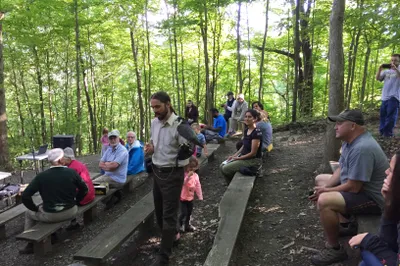
WVU Core Arboretum Nature Connection Series begins early June
West Virginia University’sCore Arboretum will bring local and regional nature experts to campus this summer in its annual Nature Connection Series.
WVU’s Phi Beta Kappa inducts 2018 class
The Eberly College of Arts and Sciences at West Virginia University is pleased to announce the induction of its 2018 class of scholars into Phi Beta Kappa, the nation’s oldest and most prestigious honor society for the arts and sciences.
WVU biology student links Clean Air Act to red spruce recovery in Appalachia
A dramatic recovery of red spruce trees in the central Appalachian Mountains led West Virginia University researchers to pursue the driving factors behind improved forest health.
Meet the Grads: Zoe Dobler
More than 1,000 students from the Eberly College of Arts and Sciences will walk across the stage on Sunday, May 13 as they graduate from West Virginia University, ready to take on the world.

WVU biology student connects sense of smell to brain diseases
Studying how insects’ wing movements affect their sense of smell has the potential to explain underlying causes of disorders like schizophrenia, Parkinson’s disease and shortness of breath, according to new research from West Virginia University.
Record number of WVU students receive Fulbright Scholarships
A record number of West Virginia University students have been named Fulbright Scholars this year, doubling the previous record of five.
WVU biology student uses Appalachian forests to improve future climate predictions
A West Virginia University student is using Appalachian forests to improve predictions of future climate change.